
Capoeira Songs, Music and Instruments
Music in the Roda
Music is part of how capoeira happens. In the roda, the circle where capoeiristas play, voices and instruments connect the people around the circle with the two players inside it. Listening is part of participating, whether you are singing, playing an instrument or entering the game.
Capoeira is an Afro-Brazilian tradition. Its songs carry memories, teachings and references to the people who have shaped the art. Learning the music means paying attention to those meanings as well as the sound. Brazilian Ministry of Culture
This guide introduces our instruments at Capoeira Angola Palmares Orlando alongside broader Angola singing traditions. Musical arrangements and customs vary between groups. Follow the teacher leading the roda for guidance on how to participate.
Our Instruments at Palmares Orlando
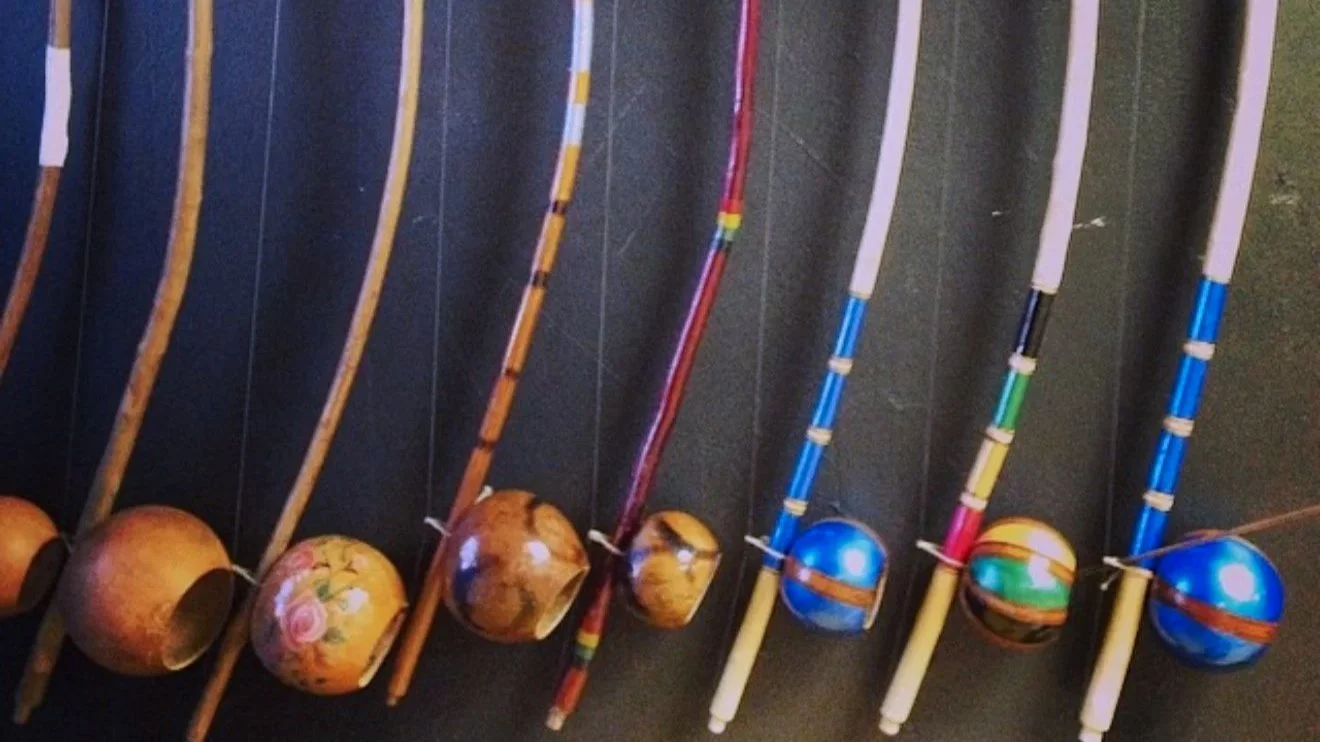
Our bateria, or musical ensemble, includes three berimbaus called berra-boi, viola and violinha, two pandeiros, an agogô, a ganzá and an atabaque. Each instrument contributes a different sound to the shared rhythm.
Berimbaus: Berra-boi, Viola and Violinha
The berimbau is a musical bow with a single wire and a gourd resonator. A small stick strikes the wire, while a coin or stone helps change its sound. The player also holds a small basket shaker called a caxixi. Grinnell College: berimbau
The berimbau has a guiding role in the roda. Its rhythmic patterns, called toques, help orient the game. Listening to it helps players stay connected to the music and to the person leading the roda. Brazilian Ministry of Culture
Two Pandeiros
We use two pandeiros in our bateria. The pandeiro is a hand-held frame drum with metal jingles. Its drumhead and jingles bring contrasting sounds to the ensemble, combining deeper beats with a bright, ringing texture.
Atabaque
The atabaque is a tall drum that contributes a resonant rhythmic foundation. In the roda, its sound forms part of the accompaniment alongside the other instruments and voices. IPHAN capoeira dossier, instrument section
Agogô
The agogô commonly has two bells of different pitches, struck with a stick. Its repeating pattern adds a clear, contrasting voice to the ensemble. Grinnell College: agogô
Ganzá or Reco-Reco
The ganzá or reco-reco is a cylindrical instrument that added texture to the rhythm.
Songs and Call-and-Response
In call-and-response singing, a lead singer offers a phrase and the group answers. Your response contributes to the roda, even when you are outside the game.
In many Angola traditions, an opening solo song called a ladainha is followed by sung salutations and then corridos, songs with responses that accompany the game. These moments have different roles. Listen for when the group responds, and follow the teacher’s guidance rather than assuming every song begins the same way. IPHAN capoeira dossier, singing section
Listening to Rhythm in the Roda
Music and movement develop together. The singing can recall a teacher, share a lesson or comment on the game taking place. Paying attention to the voices as well as the instruments helps you understand more of what is happening. Brazilian Ministry of Culture
As a beginner, try listening for one instrument at a time, then for how it fits with the others. Notice the repeated response in a song and the space where it belongs. Let the teacher guide when to sing, clap, take an instrument or enter the game.
Getting Started in Orlando
You do not need to arrive knowing capoeira songs. Begin by listening, ask questions and join the responses with guidance. Learning a little at a time gives you room to understand both the words and their place in the roda.
Capoeira Angola Palmares Orlando welcomes beginners ages 13 and older. To arrange your free first class with Professor Peixe, call or text 407-242-7676.
Experience movement and live music in our beginner-friendly Capoeira classes in Orlando.